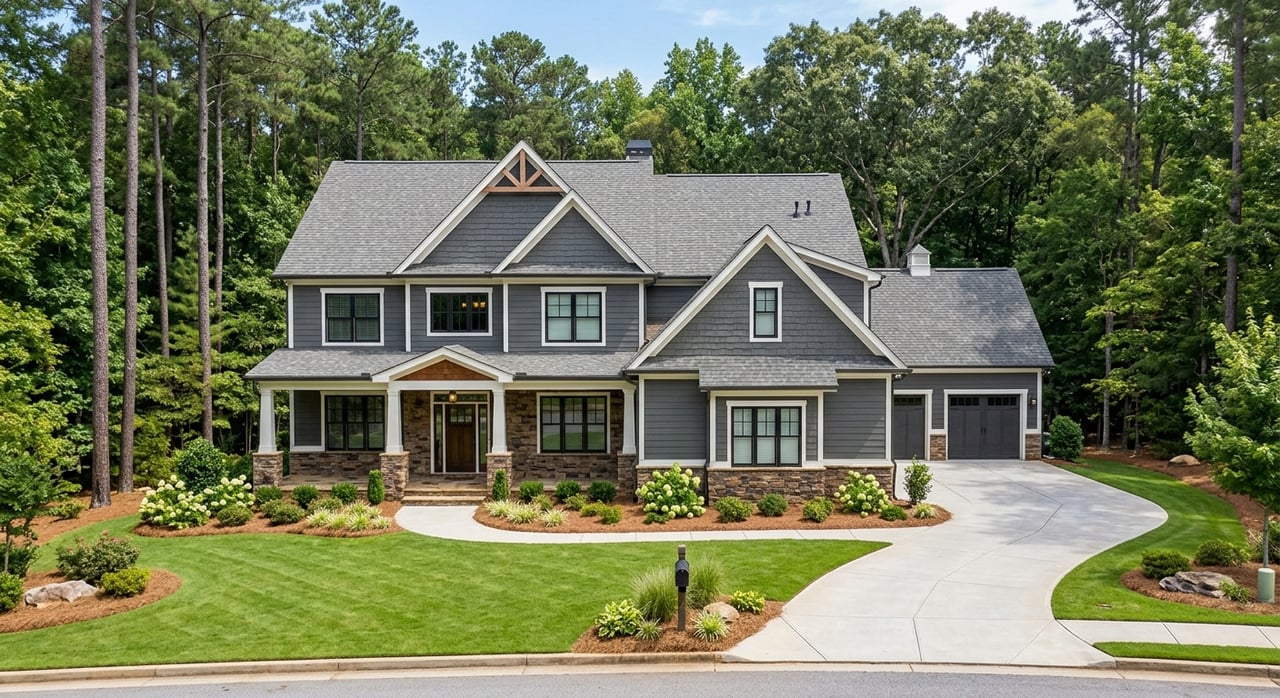
If you are moving around Charlotte, picking a suburb by mileage alone can lead you in the wrong direction. A place that looks close on the map may feel much farther away once rush-hour traffic, state lines, and your daily routine enter the picture. The better approach is to start with drive time, then layer in the lifestyle details that matter most to you. Let’s dive in.
Why drive-time search matters
Charlotte already has a meaningful commute baseline. The city reports a mean travel time to work of 25.1 minutes in 2023 for employed residents who do not work from home, according to the City of Charlotte Strategic Progress Tracker. That alone shows why a simple radius search does not always tell the full story.
Modern commute tools are built to solve that problem. They let you search from a specific destination, compare rush-hour and off-peak travel, and test different modes like driving, walking, biking, or transit. In the same Charlotte source, commute and lifestyle priorities line up with how many buyers actually shop: 53% of buyers consider commute time a top priority, 67% say walkability is very or extremely important, and 60% value being close to shopping, services, and leisure.
Start with your main destination
Your first search should begin with the place you need to reach most often. For many buyers, that is an office in Charlotte, a hospital, an airport, or a regular school or activity drop-off point. Once you know the destination, you can set a realistic travel window and compare suburbs based on how daily life may actually feel.
A helpful starting point is to test a few time bands, such as 15, 30, 45, and 60 minutes. According to Realtor.com’s commute-time filter overview, these tools are designed specifically to let buyers “test drive” a commute before buying. That makes them especially useful if you are relocating and do not yet have a strong feel for Charlotte traffic patterns.
Why mileage alone can mislead you
Two suburbs can sit a similar number of miles from Uptown Charlotte and still feel very different in practice. Route options, traffic bottlenecks, and time of day all influence what your trip looks like. That is why travel-time search usually gives you a better starting point than a standard map radius.
This matters even more if your schedule changes throughout the week. If you have hybrid work, multiple office locations, or frequent trips for errands and activities, the best suburb may be the one that performs well across several common drives rather than one single route.
How to set your first search window
If you are not sure where to begin, keep it simple:
- Pick your main destination first
- Test a 30-minute window as a practical baseline
- Compare rush-hour and off-peak results
- Save a second search at 45 minutes if you want more options
- After commute looks workable, compare parks, downtown areas, trails, and shopping
This method helps you avoid falling in love with a home before checking whether the location supports your routine. It also gives you a cleaner way to compare Charlotte suburbs that may look similar at first glance.
Comparing four Charlotte-area suburbs
Once you have a commute target, the next step is to compare how each suburb fits your lifestyle. Huntersville, Matthews, Fort Mill, and Concord all serve as realistic Charlotte-area options, but they offer different strengths once you move beyond the map.
Huntersville for north Charlotte access
Huntersville gives you a north-of-Charlotte option with a strong mix of retail, dining, and outdoor access. Visit Lake Norman describes Birkdale Village as an open-air shopping, dining, and residential area about 12 miles north of Charlotte, with tree-lined sidewalks, gardens, a sprayground, and recurring events.
That same source highlights the Huntersville Vine greenway, which connects historic downtown Huntersville with the Birkdale area along NC 73. It also points to Latta Nature Preserve as a major outdoor anchor. If your drive-time map works well for north Charlotte access and you want a suburb with both convenience and recreation, Huntersville can be a strong fit.
Matthews for southeast convenience
Matthews sits in the southeast corner of Mecklenburg County and offers a different feel. The town describes itself through planning materials for downtown Matthews as a place with historic charm, a bustling downtown, and a small-town feel.
Downtown Matthews is positioned as a regional destination with dining, entertainment, and local businesses. The town has also emphasized stronger connectivity, walkability, more downtown parking, more park space, and additional greenways and trails. For outdoor and public-space access, Matthews materials point to Stumptown Park, Four Mile Creek Greenway, Squirrel Lake Park, Matthews-Sardis Park, and Purser-Hulsey Park.
If you want a commute-friendly southeast option with a walkable town center, Matthews deserves a close look. It can be especially appealing if you want to pair Charlotte access with a more established downtown environment.
Fort Mill for cross-border choice
Fort Mill is different because it is a South Carolina option just south of the North Carolina border. According to the Town of Fort Mill, the town is close to Charlotte and has long been connected to major routes including I-77. That makes it part of the Charlotte metro conversation, but it is still a cross-border commute choice.
That distinction matters when you are building your drive-time search. You are not just comparing distance to Charlotte. You are also comparing how comfortable you are with a route that crosses the state line as part of your normal routine.
Fort Mill also gives you a small-town downtown framework with active planning around public spaces. The town is working on a new Downtown Master Plan and Parks and Recreation Master Plan, while current anchor spaces include Veterans Park, within walking distance of downtown, and Walter Y. Elisha Park, a 12-acre park with a walking trail and the town’s Strawberry Festival. If your drive-time search supports it, Fort Mill is a smart option to test alongside Mecklenburg County suburbs.
Concord for northeast alternatives
Concord is another major contender if you want a Charlotte-area suburb with a different directional pull. The City of Concord says it is minutes from Charlotte and highlights business parks with immediate access to I-85, along with a historic and active downtown.
Recent downtown improvements include free public Wi-Fi, music on Union Street, expanded outdoor-dining sidewalks, public art, and additional retail, restaurant, and bar openings. The city also documents a roughly 4-mile Downtown Greenway Loop and points to major destinations like Concord Mills and Charlotte Motor Speedway.
If your work or routine lines up well with northeast travel, Concord can give you a mix of downtown activity, trail access, and highway connectivity. For some buyers, that balance opens up more home options without giving up access to Charlotte.
Add lifestyle filters after commute
Once you find suburbs that fit your travel window, then it is time to narrow by lifestyle. This is where your weekends, errands, and routines come into focus. Commute gets you into the right zone. Lifestyle helps you choose the right place inside that zone.
A practical second-layer checklist includes:
- Access to parks and greenways
- A downtown or town-center environment you enjoy
- Shopping and dining convenience
- Outdoor recreation nearby
- Ongoing planning or public-space investment
This is a strong framework in Charlotte because Mecklenburg County says it has more than 230 parks, plus greenways, recreation centers, nature centers, and preserves. That means park access is not just a nice extra. It is a meaningful part of how many buyers compare suburban living.
A simple way to compare suburbs
If you are choosing between several communities, use a short scorecard. Rate each suburb on your most common commute, then score the lifestyle pieces that matter most to you. That keeps the search practical and prevents one attractive listing from pulling you away from your actual priorities.
Here is a simple example:
| Suburb | Commute fit | Downtown or center | Parks and trails | Overall feel |
|---|---|---|---|---|
| Huntersville | North Charlotte access | Birkdale area | Huntersville Vine, Latta | Retail plus outdoors |
| Matthews | Southeast Charlotte access | Walkable downtown | Four Mile Creek, parks | Town-center feel |
| Fort Mill | Cross-border to Charlotte | Downtown anchors | Veterans Park, Elisha Park | Small-town option |
| Concord | Northeast Charlotte access | Historic active downtown | Downtown Greenway Loop | Active core and access |
You do not need every category to score perfectly. You just need the mix that fits your life best.
The real goal: fit, not just distance
The best Charlotte suburb for you may not be the nearest one on paper. It is the one that supports how you actually live, work, and spend your time. Drive-time search helps you see that more clearly before you tour homes, make an offer, or commit to a move.
If you want help narrowing your options in Charlotte, Matthews, Huntersville, Concord, Fort Mill, or nearby suburbs, Alton Garrard offers a neighborhood-first, concierge approach that can help you match commute reality with the lifestyle you want.
FAQs
How does drive-time search help with choosing a Charlotte suburb?
- It helps you compare suburbs based on actual travel time to your main destination instead of relying on mileage alone.
What is a good first drive-time window for Charlotte home searches?
- A 30-minute search window is a practical place to start, then you can expand to 45 minutes if you want more options.
Why should Charlotte buyers test rush-hour and off-peak commute times?
- Traffic conditions can change your daily experience significantly, so testing both gives you a more realistic picture of life in each suburb.
How is Fort Mill different from Mecklenburg County suburbs?
- Fort Mill is in South Carolina, just south of the North Carolina border, so it is a cross-border commute option within the Charlotte area.
What should you compare after commute when choosing a Charlotte-area suburb?
- Focus on downtown or town-center areas, parks and greenways, shopping and dining access, and whether the community has active planning for public spaces.